Ninety Seconds to Care: What We Kept When a Ten-Minute Film Went Feed-Sized
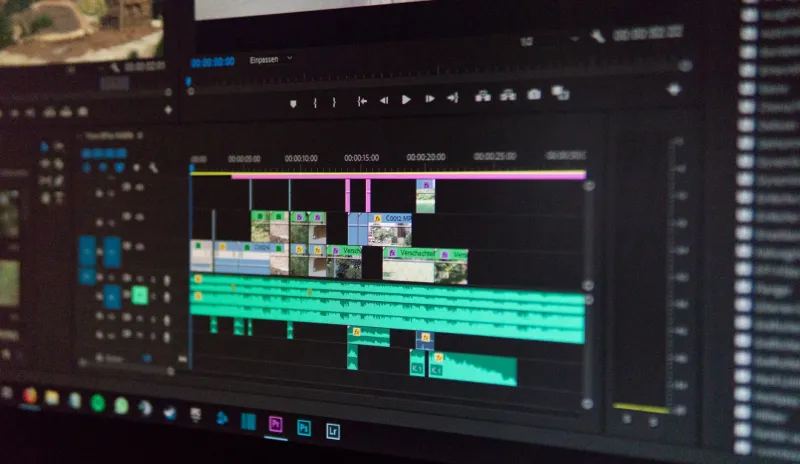
Ten minutes is a comfortable length for a short film. It gives you room to breathe, to let a shot sit, to build a small world. Ninety seconds is not comfortable. It is a different animal. When a client asked us to turn our ten-minute documentary short into a social cut, we knew the brief was not “make it shorter”. It was “make it work at a length that has no room for the original rhythm”.
The film was a quiet piece about a high street in transition: shopkeepers, shutters, the small details that disappear when a town centre changes. At ten minutes it had a slow opening, a middle section with three separate characters, and an ending that relied on a long, still shot of an empty shop window. At ninety seconds, almost none of that survived in its original form. What survived was the feeling we were trying to protect.
This is the story of how we got there, and what we learned about cutting a long film down without turning it into a trailer.
The Brief Behind the Cut
The client did not want a trailer. They wanted a short film that could stand on its own in a feed, with captions, no sound, and a thumb-stopping first three seconds. That changed the job. A trailer sells the longer film. A cutdown has to be the film, compressed. It has to have a beginning, a turn, and an ending, even if the ending is a question rather than a resolution.
We started by watching the ten-minute film with the sound off. That sounds obvious, but it is revealing. Without the voiceover and the music, you see which images are actually carrying the story and which ones were being helped along by audio. The long shop-window shot, which we loved, was doing very little on its own. The shot of a hand pulling down a shutter was doing almost everything.
Finding the Spine, Not the Summary
The temptation with a cutdown is to summarise: here is the street, here is the problem, here is a person, here is the ending. That produces a film that feels like a pitch. We wanted a spine instead: a single thread that could hold the short together and imply the rest.
For this film, the spine was a question: what do we lose when a high street changes? Every shot in the ninety-second cut had to answer that question, or at least complicate it. The three characters from the longer film became one. The opening became a single image of a shopfront with the lights off. The middle became a sequence of hands: unlocking, folding, sweeping, locking up. The ending became the same shopfront, but later, with a different quality of light.
That structure is not a summary of the ten-minute film. It is a distillation of its argument. The difference matters. A summary tries to cover everything. A distillation tries to preserve the essential thing.
The Shots We Lost (and Why It Hurt)
We lost a lot. A two-minute section with a bookseller who had been on the street for thirty years went entirely. A lovely drifting shot of a market stall in the rain went too. A piece of music that we had commissioned specifically for the longer film did not make the cut, because it needed more time to work than ninety seconds allowed.
Losing favourite shots is the hardest part of the job. Every edit is an argument with yourself. You know the shot is good. You know it does not belong. The test we used was simple: if we removed the shot, did the spine still hold? If yes, it went. If no, we fought for it. That test is not infallible, but it stops you from keeping something just because you are fond of it.
The bookseller was the hardest loss. He was the heart of the longer film. But in the short, he was a detour. The spine was the street itself, not one person’s story. We kept a single frame of his hands to suggest him, and that was enough. Or at least, that is what we told ourselves.
Sound Off, Read On
Most people will watch the cutdown with the sound off. That is not a reason to treat audio as an afterthought; it is a reason to treat captions as part of the edit. We designed the captions early, not as a layer added at the end. That changed the pacing. A caption needs time to be read, and a ninety-second film has very little time to give.
We used short, plain captions, positioned low but clear of the platform’s interface. We avoided captions that repeated what the image already said. We also built in a moment of silence, a beat with no caption and no music, to let the viewer breathe. That beat is doing a lot of work. It is the difference between a wall of information and a film.
The sound design, when it is on, is sparse: a room tone, a shutter, a distant bus. We did not try to recreate the ten-minute soundtrack. We built a new one that could survive being ignored.
Managing the Room When Runtime Falls
Client expectations are the quiet part of any cutdown. Everyone agrees that shorter is better until you remove the shot they liked. The conversation goes more smoothly if you show your working. We shared a one-page structure before we started cutting: the spine, the beats, the ending. That gave the client something to react to that was not just “we cut your favourite bit”.
We also screened the ninety-second cut on a phone, in a room, with the sound off. That is the conditions it will be watched in. It is much harder to argue for a beautiful shot when you are watching it on a five-inch screen with the volume down. The film either works or it does not.
What the Short Did Better
The honest answer is that some things got better. The short is sharper. It has a clarity that the ten-minute film sometimes lacked. The spine is visible in a way that the longer version, with its three characters and its slow opening, could not quite manage. The constraint did us a favour.
That does not mean the long film was wrong. It means the two versions are different pieces of work. The ten-minute film is the one that lets the bookseller talk. The ninety-second cut is the one that makes a stranger stop for a moment and think about the street they walk past every day. Both are valid. They just have different jobs.
The Takeaway
If you are cutting a long film down to a feed-sized version, start with the feeling, not the footage. Find the spine. Be ruthless with your darlings, but be honest about why you are keeping the ones that stay. Design for sound-off from the beginning. And show the client the structure before you show them the cut. A ninety-second film is not a shorter ten-minute film. It is a new film with the same heart. Treat it that way, and it will survive the feed.