A Film With a Boundary Problem: Shooting a Short Inside Half a Mile
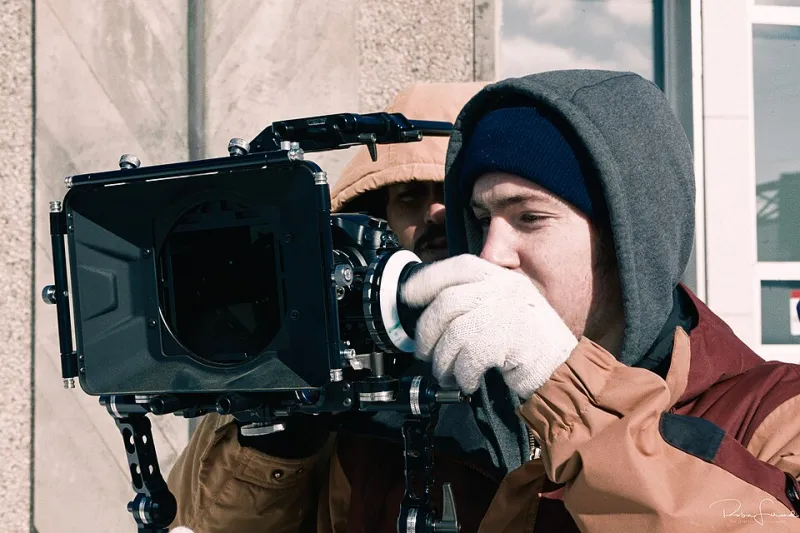
Photo: Robin Férand, CC BY 3.0, via Wikimedia Commons
On the first morning of the shoot, the director locked the van and said, half joking, that we were not allowed to leave the postcode until wrap. We had already agreed the rule. Every frame of our 2026 short had to be captured within a half-mile radius of one full postcode in Leeds. No drone cheating, no quick drive to a prettier street, no borrowed studio on the other side of town.
The film is small: two actors, a kitchen, a back alley, a bus stop and a front room. But the constraint changed everything about how we worked.
The rule and why we made it
We had just come off a project with a lot of travel and a lot of waiting. The van ate the budget. The schedule was held together with parking apps. For the next short, we wanted to see what would happen if the geography was fixed and the imagination had to do the moving.
A half-mile radius around a single postcode is not huge. Ours took in a park, a primary school, a row of shops, a church hall, two bus routes and a lot of residential streets. It also crossed a council ward boundary, which turned out to matter.
Permissions: smaller map, same paperwork
You might think a local shoot means less admin. It does not. It means the admin is closer to home. We started with an Ordnance Survey map and a highlighter, marking every location we wanted and every landowner we would need to speak to.
The local authority film office was helpful, but they still wanted risk assessments, public liability insurance and a method statement for anything involving a tripod on a pavement. The corner shop was happy for us to film outside until the delivery lorry arrived. The church hall had a wedding. The park had a football league.
We learned to build a permission ladder: public pavement first, private land with a signed release second, anything with a council prefix last. We also learned to ask for more time than we needed. A yes for a Tuesday morning is not a yes for a Tuesday morning when it rains and the shoot moves by three hours.
Location reuse: the same walls, different worlds
The rule forced us to look at the same places again and again. The kitchen in the main flat played two different homes. We flipped the table, changed the lampshade, moved the kettle and shot from the opposite corner. In the edit, nobody has noticed. The back alley became a route home, a place for a row and a spot for a quiet cigarette. The bus stop was a bus stop, then a waiting place, then a place where someone does not get on.
This is not a new trick. Rep companies do it. Low-budget filmmakers do it. But when you cannot leave the postcode, reuse stops being a compromise and becomes the grammar of the film. You start writing for the walls you have.
Casting from the neighbourhood
We put a notice in the post office, the library and a local Facebook group. We held auditions in the church hall on a Saturday morning. We saw eight people. Two of them were in the film. One neighbour ended up as a runner and another lent us a stepladder and stayed for tea.
Casting locally gave the film a texture we could not have manufactured. The bus driver in the background actually drives that route. The shopkeeper behind the counter is the shopkeeper. But it also meant we had to be honest about experience. Some of our cast had never been on a set. We built in an extra rehearsal day and wrote around what felt natural. The result is less polished than a cast of professionals, and more specific to the place.
The creative pressure cooker
When you cannot move, you have to listen. We recorded the street at different times of day: the bin lorry at 7.15, the school run at 8.40, the pub garden at 6.30. A lot of the film's world is off-screen sound. The half-mile rule made us treat the postcode as a character.
It also made us shoot longer takes. If you cannot cut away to a new location, you have to block the scene properly. We spent more time on the floor plan than we ever have. That was good for us. It was less good for the schedule, which was tight even before the weather turned.
What we would do differently
We would build in a weather day. November in West Yorkshire is not a reliable collaborator. We would get a location release template signed before the recce, not after. We would budget for parking permits earlier, because a half-mile radius still includes a lot of double yellow lines. And we would tell the neighbours sooner. A shoot is a strange thing to live next to for three days.
Would we do it again?
Yes. The postcode rule is a useful creative scalpel. It strips away the fantasy that a better location will solve a story problem. It makes you cast, dress, light and write with what is actually there. For Redcat Studios, it was a reminder that independent filmmaking is often less about what you can access and more about what you can notice.
The film is in the edit now. It never left the half-mile. Somehow, it feels bigger for it.