The Fuse Board Is Part of the Shot List: Powering a Shoot in an Old UK Terrace
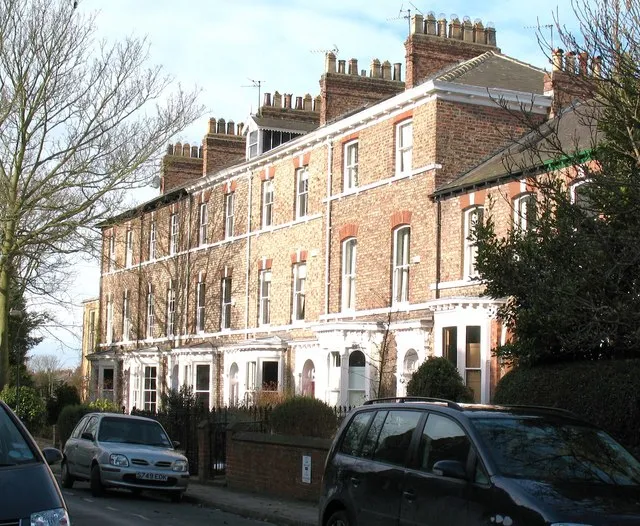
Photo: Gordon Hatton, CC BY-SA 2.0, via Wikimedia Commons
There is a moment on every low-budget shoot in an older UK home when someone holds up a four-way extension lead like it’s a magic wand. Usually it’s the person who has just realised the only free socket is behind a piano, under a cardigan, and roughly nine metres from where the camera needs to be. In a Victorian terrace, that moment arrives early. Sometimes before the kettle.
As we head into the tail end of 2026, Redcat Studios has been shooting more small interiors than ever: short films, documentary inserts, behind-the-scenes stills. The pattern is consistent. Older houses are generous with character and stingy with power. High ceilings, deep skirting boards, a bay window that does half your lighting for free — and a consumer unit in a cupboard under the stairs that looks like it was installed during the reign of a different monarch.
The recce starts at the fuse board
We used to recce a location by asking: where can we put the camera? Now we ask: where does the power come from, and what else is already using it?
On a recent terrace shoot, the homeowner proudly showed us the front room. Two single sockets. One had a lamp plugged in. The other had a lamp, a phone charger and an extension lead that disappeared behind the television. The kitchen had a washing machine, a fridge-freezer, a kettle and a toaster on what appeared to be one ring main. The hallway had a socket that worked only when the landing light was on. We did not test that theory. We nodded, wrote it down, and called an electrician.
That is not overkill. On a domestic shoot, the risky bits are not usually the camera batteries. They are the unknown circuits, the borrowed extension leads with no RCD, the daisy-chained adaptors, and the assumption that a 13A socket will happily run a 2kW kettle and a 1kW lighting rig while someone’s tumble dryer clicks on upstairs. It will not. Not safely.
Watts, amps and the humble kettle
The maths is simple enough to do on the back of a call sheet. Watts divided by 230 volts gives you amps. A 13A socket is rated for around 3kW, but that is a ceiling, not a target. A domestic kettle is often 2.5kW to 3kW. A fan heater is 2kW. A domestic iron is 1kW to 2kW. Add a few practical lamps and a monitor, and you are already in the zone where someone says, ‘It’s been fine before.’
We now build a power plan before we build a shot list. It looks deeply unglamorous: a table of rooms, sockets, circuits, likely loads and who is responsible for what. The gaffer — or the director wearing the gaffer’s hat — marks which lights can run from the house, which need battery power, and which simply are not coming. On a micro-budget film, that last category is bigger than you think.
Let the house choose the lighting
Limited power is not only a safety issue. It is a creative constraint, and often a useful one. In a Victorian terrace, you already have tall windows, thick reveals and rooms that fall into soft contrast. If you cannot run a 2kW fresnel, you learn to use a 60W LED panel, a bounce board and a practical lamp with a dimmer. You learn where the daylight lands at 2pm and how quickly it leaves. You learn that a white ceiling is a free softbox and a dark hallway is a natural negative fill.
We have started scheduling around the house’s appetite for electricity. High-draw jobs — kettle, heater, hair dryer, anything that makes tea or heat — happen between setups, not during takes. Battery charging happens overnight or in a different room on a separate circuit. The monitor and recorder go on one strip; lights go on another; the domestic fridge stays exactly where it is and does not get unplugged just because the sound recordist is chasing a hum. (Though sometimes it does. Sorry, fridge.)
Cable routes are part of the blocking
An extension lead is a supporting character, but it should never be a trip hazard. In a narrow terrace hallway, a cable across the floor is not a production problem; it is an accident waiting for a runner with a mug of tea. We use cable ramps, not just gaffer tape. We route along skirting boards, over door frames and under rugs where it is safe to do so. We keep cables away from stair treads, kitchen worktops and the path between the talent and the loo. We colour-code leads so the person resetting a light does not unplug the sound recorder by mistake.
And we do not tape cables to walls with whatever is in the van. Some paints and wallpapers in older homes will lift if you look at them wrongly. The owner will notice. You will be paying for it.
Hire the electrician, then get on with the film
We now put a qualified electrician in the budget as a line item, not a favour. On a recent shoot, that meant a half-day visit to inspect the consumer unit, confirm the earth, test the sockets we planned to use and install a temporary RCD-protected distribution board for the lighting. It cost less than a day of gear hire and considerably less than a fire. The electrician also told us which circuits were already loaded, which socket was on a spur, and why the downstairs lights flickered when the washing machine started. That information changed the shot list more than any creative meeting.
If you are shooting in a rented flat, a shared house or a period property with a fuse board older than the crew, get someone qualified to look at it. PAT-test your own leads. Use RCD protection. Do not daisy-chain four-way adaptors until they look like a small electrical Christmas tree. The creative work is better when nobody is quietly wondering whether the walls are getting warm.
The unglamorous budget line that saves the day
Power planning is not the fun part of filmmaking. It does not get a behind-the-scenes photo. But in a Victorian terrace, it shapes everything: where you put the camera, when you shoot the wide, how long you can run a practical, and whether the homeowner ever lets a film crew back in. The extension lead may not get a credit, but it is absolutely part of the cast. Give it a proper route, a safe supply and a plan. Then you can get back to the bit everyone actually wants to talk about: the film.