Forty Portions, One Fryer: A Shoot Day Catered by the Local Chippy
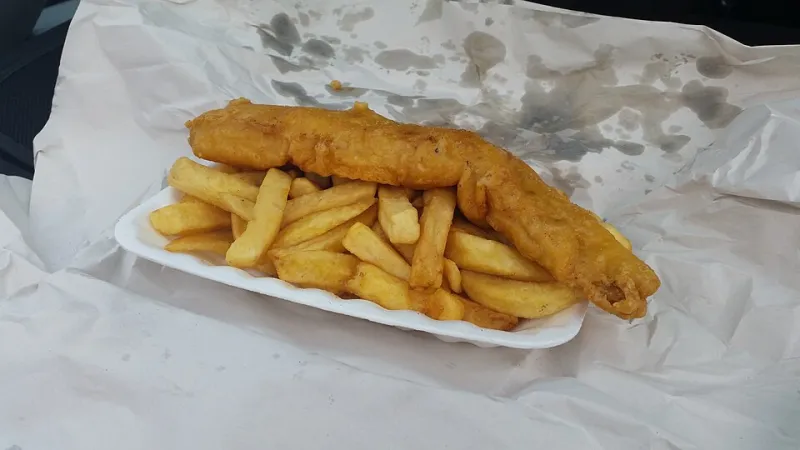
Photo: Gvjekoslav, CC0, via Wikimedia Commons
On a grey Friday in October, Redcat Studios found itself in a borrowed community hall with forty people, a shooting schedule that had already slipped by an hour, and no catering budget worth the name. The nearest chippy was three hundred metres down the road. That was the whole plan. It turned out to be one of the better production decisions we made all year.
We're not pretending a chip-shop lunch is a revolutionary idea. But feeding a micro-budget cast and crew well is mostly about logistics, not money, and a single local fryer can teach you a lot about both. Here's how it went, including the bits we'd do differently.
The order that nearly broke the Friday rush
Our first mistake was almost leaving it too late. A chippy at 5pm on a Friday is not a catering operation; it's a queue with a deadline. We rang on the Wednesday, spoke to the owner, and asked what he could realistically handle for forty people at 1pm. His answer: yes, but not if we turned up at six and expected everything at once.
So we split the order into two waves. Half the portions were fried for 12:45, the other half for 1:20, which meant the second batch was still hot when the first wave had finished. We sent over a simple spreadsheet the night before: names, portions, dietary notes, and a contact number. The shop wrote it on the back of a delivery pad. It worked because it was small enough to read.
We also paid upfront. That sounds dull, but it meant nobody had to stand at the counter with a card machine while forty people hovered by a trestle table. If you're ordering from a chippy, ring ahead, ask about their quiet windows, and be honest about your numbers. They can fry in batches if you give them a timetable.
Keeping chips warm without a catering van
We had no hot boxes, no chafing dishes, no van. What we did have was two cool boxes, a stack of clean tea towels, and a hall with an oven. The trick is not to seal the chips in a lidded container where they steam themselves into a sad, limp pile. Line the box with greaseproof paper, add a tea towel, and leave the lid slightly ajar so the steam can escape. It buys you twenty minutes, maybe thirty.
For the second wave we asked the shop to fry the chips a little harder, then we finished them in the hall oven at 150°C for six or seven minutes before serving. That brought the crisp back without drying them out. Salt and vinegar went on at the table, not in the box, because vinegar too early turns the paper to mush.
One thing we'd change: assign one person to the food run and only one. We had two people go, then three, then a runner who was also meant to be on sound. The chips were fine; the sound department was less fine.
Allergies, dietary requests, and the one person who doesn't eat fish
This is the part that needs actual care. We collected dietary notes with the call sheet, then rang the shop to ask about oil, batter, and fryer separation. Many chippies fry chips in beef dripping, which rules them out for vegetarians and vegans unless they have a separate fryer. Batter contains gluten. Fish allergies are serious, and cross-contact in a busy fryer is real.
The shop was upfront: chips in vegetable oil, separate fryer, but the fish batter was not gluten-free. So we labelled every portion with a name and a note, and we brought a backup bag of rolls, fruit, and a couple of supermarket sandwiches for anyone who couldn't eat from the fryer. Nobody minded. What people mind is being asked about their allergy at 1pm when they're hungry and the food is already on the table.
We also had one crew member who doesn't eat fish. He got a battered sausage and a portion of chips and was perfectly happy. A chippy is a broader menu than people remember.
Why it beat a fancy craft table
A good craft table is fine. But there's something about a tray of hot chips wrapped in paper that does more for a crew than another flapjack. It's warm, it's salty, it's shared. People sat down together, which is not nothing on a shoot day. It also kept money in the local economy, and the shop let us use their frontage for a pick-up shot two weeks later, which felt like a fair trade.
Cost-wise, we fed forty people for roughly £7 a head. That included fish, chips, sausages, mushy peas, curry sauce, and a few cans. You cannot hire a caterer for that. You cannot even hire a decent coffee cart for that.
The clean-up, and what we'd do next time
Chip shop catering is not tidy. There's grease, paper, and a bin situation. We brought our own bin bags, asked the shop for a couple of cardboard boxes to carry everything, and returned the cool boxes the same afternoon. Next time we'd order ten per cent extra portions, because someone always brings a friend to the afternoon session, and we'd put the food order on the call sheet in bold rather than a footnote.
We'd also avoid doing it on the hottest day of the year, but that's less about chips and more about the hall.
For Redcat, it's become a small production rule: feed people properly, keep it local, and don't overcomplicate it. A chip shop can carry a shoot day if you give it a timetable and a bit of respect. The chips are just the beginning.