Borrowed Ground, Ready-Made Sets: A Short Film Grows on an Allotment
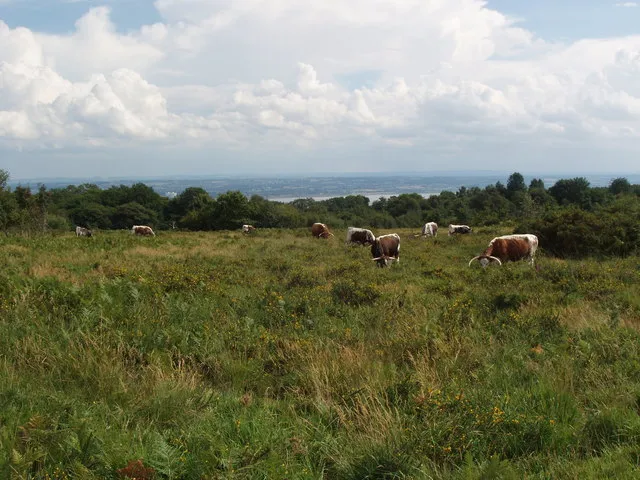
Photo: Christopher Clift, CC BY-SA 2.0, via Wikimedia Commons
There is a particular sound an allotment makes at 6.40am. Not birdsong, though there is plenty of that. It is the squeak of a galvanised gate, followed by the hollow clunk of a watering can being set down on concrete. We heard it every morning for four days while shooting a short film on a working plot site in the north of England, and by the end it had worked its way into the sound design whether we liked it or not.
We had no build budget. We had a two-page shot list, a cast of three, a borrowed van and a licence agreement that fitted on one side of A4. What we did have, in abundance, was a location that had been designed for us over several decades by people who had never met us and had no idea a film crew was coming.
The Access Conversation Comes First
Allotment sites are not film sets. They are communities with rules, committees and a genuine stake in the ground. Before a single lens cap came off, we spent two evenings at the site association meeting, drinking tea from a urn and explaining what we wanted to do. The questions were practical and entirely fair: would we block the path, would we trample beds, would we be there at dawn when the old boys come down to check their brassicas.
We agreed a few things in writing. No shooting on Sundays, because that is when the site is busiest. No equipment left overnight, even in the locked shed. And a hard promise that any plot we used would be reinstated exactly as we found it, right down to the leaning stack of seed trays by the water butt. That last bit mattered more than any release form.
What surprised us was how quickly the conversation shifted from permission to collaboration. One plot holder offered us his greenhouse because it had, in his words, 'good light in the morning'. Another pointed out that the shed at the far end had a door that stuck halfway open, which he thought would look 'proper'. He was right. It became a recurring framing device.
Production Design Was Already Growing
We had budgeted precisely nothing for set dressing. We had a few props in the van: a radio, a chipped enamel mug, a folded newspaper. Everything else came from the site. Bamboo canes became a natural grid for diffusing light. A stack of used compost bags gave us texture in the background of a two-shot. The polytunnel, with its milky plastic and condensation, turned into a softbox the size of a bus.
The lesson is not that you should always shoot on an allotment. It is that a living location carries its own history, and that history does more work than a dressing team ever could. A shed with a wonky shelf and a rusted padlock tells you who uses it. A greenhouse with a cracked pane and a tomato plant tied to a stick tells you someone cares. You cannot buy that by the metre.
We did have to be ruthless about what we removed. A bright blue tarpaulin in the background of a period-ish scene had to go, apologetically. A plot holder's wheelbarrow, which we all loved, was too distinctive: it pulled focus in every wide shot. We ended up with a simple rule. If an object looked like it had been placed there for the camera, it had to leave. If it looked like it had been there for twenty years, it stayed.
Light, Sound and the Weather Have Their Own Schedule
The allotment did not care about our call sheet. Light arrived when it arrived, filtered through hedges and greenhouse glass, and left when it left. We shot the same scene three mornings in a row because the first two were too overcast and the third was too bright. The take we used was from the second morning, when the sun was doing something complicated behind a cloud that we could not have faked with a flag.
Sound was the bigger challenge. Allotment sites are not quiet. There is a distant road, a dog that barks at nothing, a radio in a shed playing a phone-in, and the constant, gentle percussion of someone hoeing. We recorded wild tracks each morning and leaned into it. The final mix uses the site's own ambience under the dialogue, which gives the film a texture we could not have created in a studio.
Scheduling became a negotiation with the place itself. We shot in the early morning and late afternoon, when the plot holders were fewer and the light was kinder. We built in a half-day buffer for weather and used it. We also learned to ask, every morning, which plots were being worked that day, so we could plan around them rather than through them.
What the Runner Beans Taught Us
By the final day we had stopped treating the allotment as a backdrop and started treating it as a cast member. The runner beans swayed in a way that no fan could replicate. The shed door stuck at exactly the right angle. The greenhouse gave us a scene that felt warm and enclosed without a single light being rigged.
For a micro-budget film, that is the whole game. You are not buying production value. You are borrowing it, and the borrowing comes with obligations. You leave the site as you found it. You credit the people who let you in. You accept that the place will impose its own rhythm on your shoot, and you build your schedule around that rhythm rather than fighting it.
We came away with a film, a few new acquaintances and a standing invitation to come back for the harvest. We also came away with a rule we will use on every project from now on. Before you design a set, go and find a place that is already alive. Then ask nicely if you can stand in it for a while.