The Lights Are a Bit Rubbish, and That's the Point: Shooting a Town Switch-On Honestly
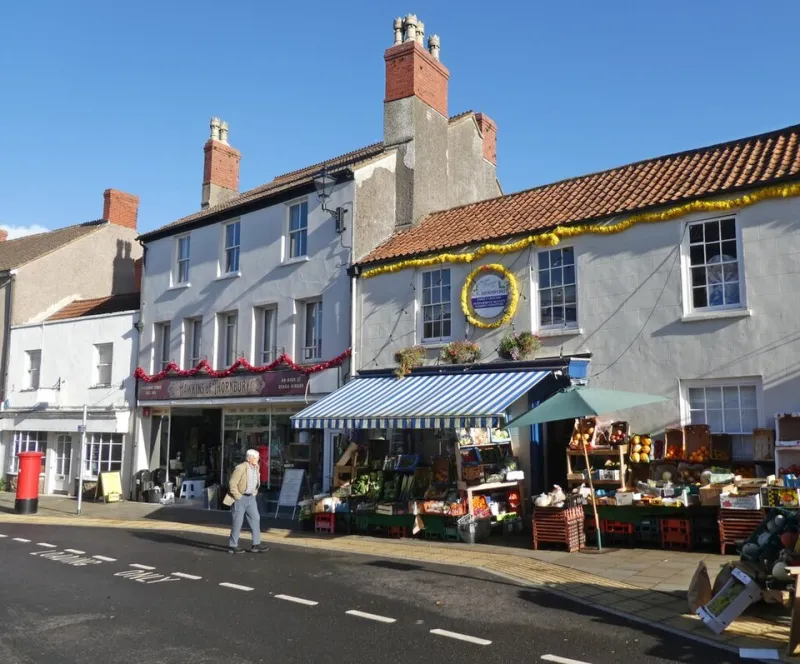
There is a particular moment at a small-town Christmas light switch-on when the countdown finishes, the crowd goes up, and someone nearby says, with real affection, that the lights are a bit rubbish. They are usually right. A few strings of LEDs wrapped round a lamppost, a slightly wonky star above the butcher's, a Santa that has seen better decades. And that is exactly why it is worth photographing.
Redcat Studios spent a cold Saturday in late November 2026 shooting a switch-on in a Midlands market town for a short documentary photography set. Not a council press shoot, not a sponsored content job, just a local event, a camera bag and a flask of tea that went cold faster than expected. The brief we gave ourselves was simple: make pictures that feel warm without pretending the town is a snow-globe fantasy. No staged cheer. No fake snow. No caption that says 'festive fun for all the family' unless someone actually said it.
Arrive before the countdown
The best switch-on photographs are rarely made at the moment the button is pressed. They are made twenty minutes earlier, when the brass band is still tuning up, the burger van is doing its first rush and a child is being lifted onto a parent's shoulders for the third time. Arrive early, walk the whole square, and work out where the light is coming from. Is the stage lit by a hired rig or by the fish and chip shop? Is the town hall uplit, or just orange? Where will the crowd push when the countdown starts?
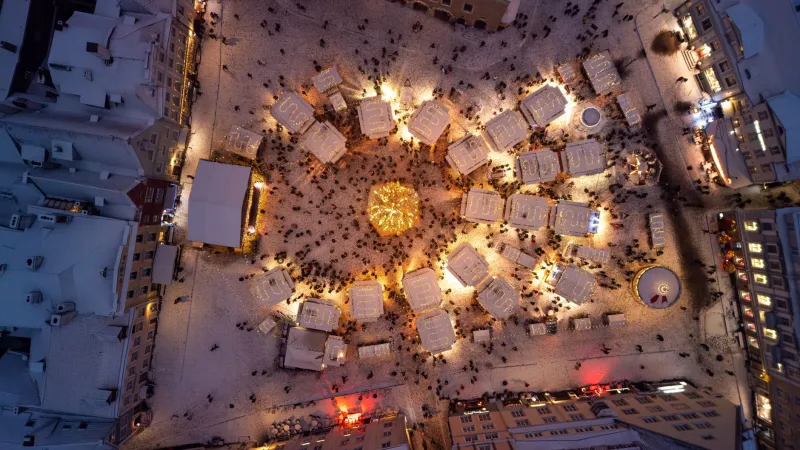
We usually pick two positions: one wide spot for the crowd and the street, and one tighter corner for faces. A step, a low wall or a shop doorway gives you a bit of height without turning the picture into a drone shot. Ask the person behind you if you are blocking their view. They will tell you. It is a documentary shoot, not a barricade.
Settings for a sodium-and-LED mess
British town centres at night are a mix of warm street lamps, cold shop LEDs, a stage light that is either blue or green, and the occasional car headlight sweeping through. Your camera will not make sense of it on auto. Go manual, shoot raw, and expose for the lights rather than the sky. If you expose for the dark blue evening, every bulb turns into a white blob. If you expose for the bulbs, the sky goes black and the crowd becomes silhouettes. Sometimes that is the picture. Sometimes it is not.
A workable starting point: shutter speed around 1/60 to 1/125 second, aperture between f/2.8 and f/4, ISO 1600 to 6400 depending on your camera. Keep an eye on your highlight warnings. A little clipping in the bulbs is fine. A clipped face is not. White balance is a judgement call. Auto can swing wildly between frames, so we often lock around 3500K to 3800K and adjust later. It keeps the set consistent. A monopod is more welcome in a crowd than a tripod, and a small prime lens lets you work quietly without shoving a zoom into someone's ear.
Where to stand when everyone else has a phone
Everyone has a phone now, held aloft, recording the same thirty seconds. You do not need to fight that. Stand slightly to the side of the main throng and look across it, not through it. The backs of heads, a child on shoulders, a hand holding a paper cup of chips: these are the pictures that tell the story of the night. If you want the stage, get there early and then leave. The stage shot is one frame. The crowd is the set.
Ask before you photograph people close-up, especially children. A simple 'all right if I take a picture? I'm shooting the switch-on for a local project' does the job. Most people say yes, some say no, and both answers are fine. We keep a small card with the studio email on it for anyone who asks what we are doing. It is old-fashioned and it works.
Look for the people, not the cheer
The pictures we kept from our winter shoot were not the ones of raised arms and open mouths. They were the woman from the bakery handing out mince pies from a tray, the brass player warming his valves under his coat, the kid in a light-up reindeer jumper looking frankly underwhelmed by the whole affair. That is the honest version of a switch-on. Warm, slightly chaotic, a bit damp round the edges.
Look for the local characters who are not performing. The volunteer with the collection bucket. The councillor in a chain of office that is slightly too big. The stallholder who has been doing this market for thirty years and can tell you exactly which year the tree blew over. Those photographs will still mean something in January. The staged cheer will not.
Editing for January, not December
A switch-on set can easily turn into an orange-and-red mush. We cull hard: keep the frames with a clear subject, a bit of humour or a real moment, and lose the rest. Then we batch the white balance, pull back the reds and oranges a touch, and protect the blacks so the picture does not go muddy. A little grain is fine. Over-sharpening is not. Export small for the web, keep the originals, and write captions with names and places where you have them.
The test we use is simple: would this picture still make sense on a grey Tuesday in January, without tinsel in the frame? If yes, it stays. If it only works because of a fairy-light bokeh overlay, it goes. Community photography does not have to be sentimental to be warm. It just has to be true.
What we brought back
Our set from the 2026 switch-on is not a Christmas card. It is a record of a town doing its thing in the cold: the queue for the burger van, the wonky star, the kid who dropped his glow stick, the brass band playing slightly behind the beat. It is affectionate, but it is not soft-focus. And that feels like the right way to photograph a British winter. The lights are a bit rubbish. The night is better for it.