Shopfront Stories: Photographing the High Street Before the Shutters Come Down
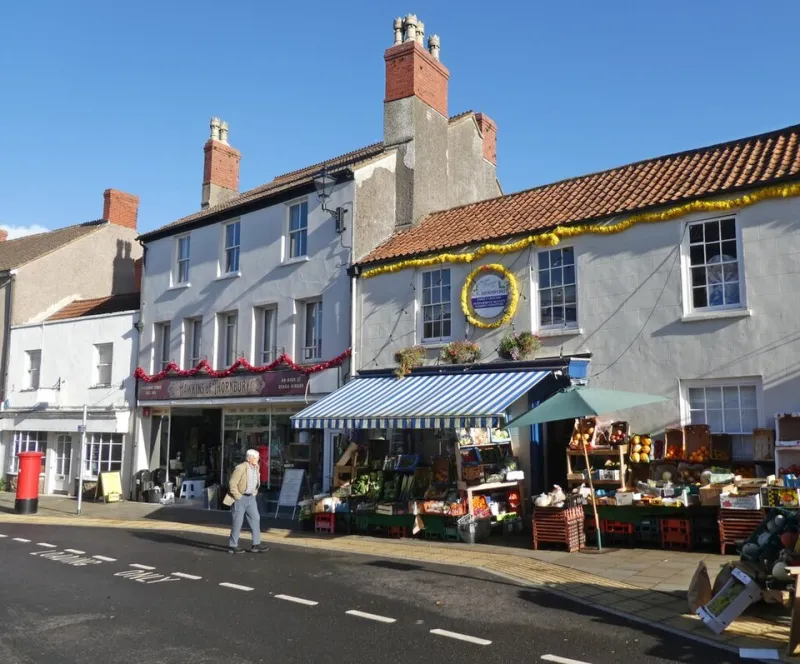
Photo: Roger Cornfoot , CC BY-SA 2.0, via Wikimedia Commons
On a wet Tuesday in 2026, we stood outside a hardware shop watching a man in a brown apron rearrange a window display of seed trays and WD-40. The sign above him had been repainted at least twice. The handwritten card in the door said 'back in five'. It was, by some distance, the most honest piece of graphic design on the street. That was the moment the Redcat Studios high-street photography series clicked into place.
Why shopfronts are worth photographing
Independent shops are visual ecosystems. There is the fascia lettering, sometimes hand-painted, sometimes vinyl, sometimes a strange hybrid of both. There are the handwritten notices, the opening-hours cards, the 'no credit' signs, the charity boxes, the laminated menus and the A-boards that have been weighted down with a brick since roughly 1998. These are design decisions made under constraint, and that is exactly why they are interesting.
A high street is also a cultural document. It shows how a town presents itself to itself: what it sells, what it celebrates, what it hides and what it has stopped pretending to fix. In 2026, UK high streets are under pressure from online shopping, rents, out-of-town retail and changing habits. Some shops are closing. Some are adapting. Some are stubbornly, brilliantly still there. The point of the series is not to declare the high street dead. It is to look closely while it is still changing.
How the series was shot
We approached shopkeepers in person, explained the project and offered copies of the images. That conversation mattered more than any camera setting. Some people said no, which is fine. Some said yes and then told us the history of the building for twenty minutes, which was better than fine.
The kit was deliberately simple: a mirrorless body, a 35mm-equivalent lens and a 50mm-equivalent lens. Natural light where possible, a reflector where not. For each shop we made two frames: one wide portrait of the shopkeeper in their environment, and one detail of the shopfront itself. The detail might be the lettering, a handwritten notice, a threshold, a door handle worn smooth by use. We asked before photographing anything inside, and we were careful with people's faces, names and personal information. Consent was not a formality. It was part of the method.
The edit was built around rhythm rather than location order. We sequenced by colour, typography and mood, so a bright green fascia might sit next to a hand-painted sign with similar letterforms. The grade stayed warm but not nostalgic. We corrected white balance properly because sentimentality is not the same as care.
What the details revealed
Shopfronts are full of layers. A new vinyl sign covers an older painted one. A handwritten card sits next to a professionally printed poster. A modern LED strip glows under a fascia that was clearly designed before anyone in the shop was born. These are not accidents. They are the visible history of a business making do, updating in stages and keeping what still works.
The handwritten notices were the most revealing. Some were funny. Some were weary. Some were beautifully practical: 'Please close the gate', 'Cards only under £5', 'Ask inside for keys'. They are vernacular design at its most direct. You cannot fake that tone in a brand workshop, and you should not try.
The changing high street in 2026
We photographed vacant units too: the shutters, the To Let signs, the faded outlines where signage used to be. It would be easy to make a project like this feel like a wake. We did not want that. The high street in 2026 is not one story. Some independent shops are busier than ever because they offer something a website cannot: knowledge, repair, conversation, a reason to leave the house. Others are hanging on. Others have gone.
The series is a record, not a verdict. If it has a purpose beyond the photographs, it is to encourage people to notice the design on their own doorstep: the lettering, the thresholds, the notices, the people behind the counter. These things are ordinary until they are gone, and then they become archives.
Practical notes for photographers
Ask first. Buy something if you can. Do not block the pavement. Be careful with children and anyone who does not want to be photographed. Share the images afterwards. Look at the details as well as the faces: the fascia, the window display, the door, the way light falls into a shop at 4pm in November. The high street is a design archive with people in it. Photograph both.